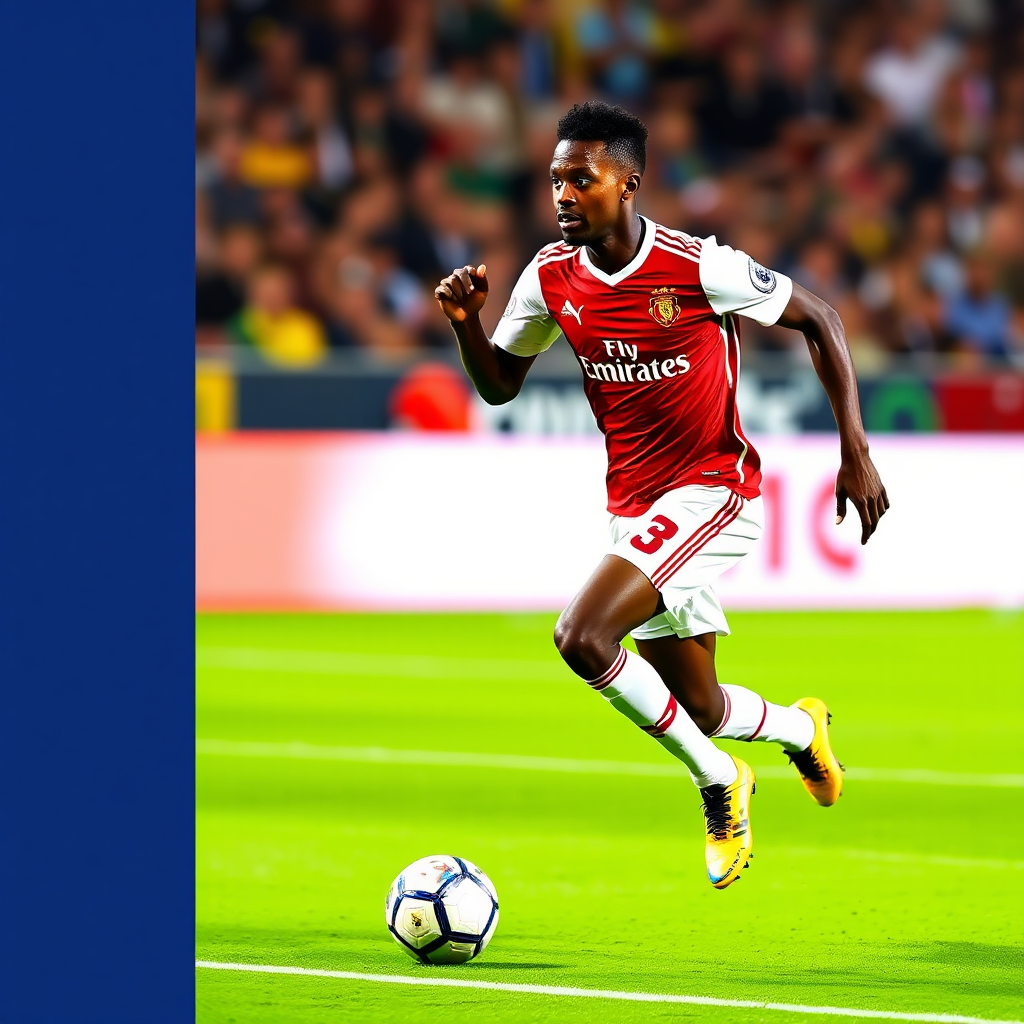
Category: News

  • Today’s European Football Analysis: Tactical Shifts and Player Ratings on xx88.me.uk

    Today’s European Football Analysis: Tactical Shifts and Player Ratings on xx88.me.uk

    A thirty-five-minute window into a midweek European fixture reveals a predictable pattern breaking down. The home side, previously organized in a compact 4-4-2 mid-block, suddenly compresses its defensive line by twelve meters and overloads the left half-space with an inverted fullback. Simultaneously, the away team adjusts their counter-pressing triggers, shifting from man-marking to zonal interception lanes. Spectators scanning live commentary quickly realize that standard box-score statistics are lagging behind reality. What matters now is how positional rotations are being tracked, how individual contributions are weighted beyond goal involvement, and whether the data feeding back to analysts truly captures structural adaptation. When evaluating today’s European football analysis through the lens of tactical shifts and player ratings, the conversation inevitably centers on verification standards, transparency in calculation methods, and the practical application of rating systems that attempt to quantify dynamic match states.

    Five Core Observations From Recent Matchbreakers

    Current matchday environments across elite competitions demonstrate consistent structural trends that reshape how evaluations are constructed. First, high-intensity pressing has become less about relentless chasing and more about calculated directional forcing. Teams are using staggered lines to channel opponents into predetermined zones, which means individual rating algorithms must account for space denial as heavily as ball recovery counts. Second, rating distribution has shifted away from bell curves toward polarized outcomes. Players operating in transition-rich systems accumulate higher variance in their performance scores because they are exposed to rapid phase changes that amplify both successful interventions and costly mismatches.

    Third, managerial substitutions are increasingly driven by real-time metric thresholds rather than intuition alone. Clubs monitor fatigue indicators, pressing efficiency drops, and pass completion degradation under pressure to trigger tactical pivots. Fourth, cross-league rating normalization remains fragmented. A defensive midfielder rated highly in La Liga may appear statistically average in the Bundesliga simply because competition density and spatial geometry differ significantly between regions. Fifth, verification pipelines require explicit disclosure of weighting formulas. When rating engines do not publish how they balance progressive carries, defensive duel success, and chance creation support, the resulting scores operate closer to marketing tools than analytical instruments.

    XX88.COMHình minh hoạ: XX88.COM

    How Modern Structural Adaptations Reshape Performance Tracking

    Tactical evolution has fundamentally altered what constitutes measurable excellence on the pitch. The traditional star-rating system relied heavily on retrospective storytelling, often rewarding visibility over necessity. A player touching the ball frequently does not automatically drive positive outcomes if those touches occur in low-leverage areas. Contemporary analysis demands phase-aware evaluation. During build-up stages, success should measure progressive passing networks, safe retention under opposition pressure, and vertical progression rates. During transition phases, metrics must capture first-touch decisions, immediate direction changes, and spatial control. During settled attacking sequences, ratings should prioritize chance creation quality, defensive recovery positioning, and second-ball dominance.

    The risk management perspective emphasizes that opacity in these calculations introduces significant decision latency. Analysts and informed readers must treat rating outputs as probabilistic estimates rather than definitive judgments. Verification begins with checking whether the underlying data sources distinguish between isolated actions and cumulative influence. Does the system track off-ball movements that collapse defensive structures? Are passing networks weighted by defensive density at the receiving zone? Is there public documentation explaining how outlier performances are smoothed versus retained?

    For practitioners seeking structured breakdowns alongside verified rating methodologies, exploring dedicated analytical hubs such as XX88.COM provides a centralized view of how clubs are adjusting their structural baselines and how performance scores are contextualized within broader tactical narratives. Transparency in presentation allows readers to separate meaningful signal from noise, reducing reliance on emotionally driven conclusions.

    Evaluation Approach Primary Metrics Bias Vulnerability Update Cadence Tactical Alignment
    Legacy Star Scoring Goals, assists, fouls conceded, overall impression High exposure bias; rewards attacking visibility over defensive utility Post-match only Low correlation with phased positional demand
    Expected Threat Mapping xG chain contribution, shot location value, defensive disruption score Moderate sensitivity to sample size; benefits from multi-match rolling windows Real-time or near-real-time Strong alignment with transition and build-out phases
    Pressing Trigger Tracking Pass lane interceptions, force-to-error rate, compactness index Can overvalue defensive work that lacks subsequent attack conversion Live feed with post-match aggregation Directly measures structured defensive organization
    Composite Weighted Index Multi-phase scoring with position-specific weight adjustments Depends entirely on published weighting logic; opaque formulas introduce trust friction Match-end with weekly trend overlays Adapts to role diversity but requires transparency audits
    XX88.COM

    Who Fits This Analytical Framework And Who Should Step Back

    The current landscape of European football analysis demands a specific mindset. Individuals who thrive in this environment typically share several traits. They treat performance data as a decision-support tool rather than a prophecy. They understand that tactical systems evolve across fixtures, making single-match ratings inherently volatile. They actively cross-reference rating providers, look for stated methodology documents, and accept that all metrics carry inherent sampling limitations. This group includes tactical assistants reviewing opponent tendencies, fantasy competition strategists optimizing roster construction, disciplined readers who apply structured bankroll principles to informed selection, and analysts building historical databases for longitudinal studies. These users benefit from transparency because they can stress-test claims, adjust for rotation schedules, and isolate rating components that align with specific competitive contexts.

    Conversely, certain readers will experience diminishing returns or outright frustration when engaging with rigorous tactical evaluation and transparent rating systems. Casual viewers seeking entertainment-focused recap content rarely benefit from deep metric breakdowns, as the cognitive load outweighs the utility. Individuals expecting deterministic prediction models should step back immediately; football contains too many micro-variations for mathematical certainty. Users comfortable with anonymous tipster culture often struggle with verification-focused frameworks, since those systems deliberately avoid guaranteeing outcomes and instead emphasize probability ranges and risk boundaries. Finally, readers who interpret player ratings as moral or permanent judgments of ability will repeatedly encounter disappointment, as dynamic systems constantly reweight contributions based on positional demand, opponent strength, and match state pressure. Recognizing these distinctions prevents misaligned expectations and preserves analytical discipline.

    XX88.COM

    Practical Steps For Responsible Application

    Translating tactical shifts and player ratings into actionable insight requires disciplined methodology. Begin by documenting the base structure of the formation in play, noting how defensive lines compress or stretch relative to opponent buildup speed. Record rating updates only after verifying that the provider accounts for phase-specific demand. If a goalkeeper receives a low score for a clean sheet, examine whether the underlying system penalized them for facing above-average shot quality or missing expected goals values. Maintain a tracking ledger that logs rating discrepancies against observed match events across a minimum five-game sample. This habit exposes systematic biases, such as overrating wide players who consistently face lower defensive density compared to central operators navigating congested zones.

    • Validate the calculation pipeline before trusting headline numbers. Look for published weighting schemes, data source citations, and error-margin disclosures.
    • Apply position-specific filters when comparing ratings. A center-back’s primary responsibility differs fundamentally from an attacking midfielder’s transitional duties.
    • Adjust expectations during cup competitions and international breaks where squad rotation distorts baseline performance averages.
    • Implement strict allocation limits regardless of perceived rating confidence. High-confidence outputs still exist within probabilistic distributions.
    • Review manager substitution patterns to identify whether tactical pivots confirm or contradict published rating trajectories.

    Risk management remains the cornerstone of sustainable engagement. Treat every rating as a snapshot captured within constrained variables. Demand clear attribution when composite scores blend disparate metrics. Recognize that media-driven narrative cycles often inflate or deflate individual outputs outside of statistical justification. Consistency in verification procedures reduces emotional deviation and keeps analytical focus aligned with measurable performance drivers.

    XX88.COM

    Frequently Asked Questions

    How reliable are player ratings during highly rotational fixtures?

    Ratings lose predictive stability when starting personnel change frequently. Rotation disrupts established partnerships, resets fatigue baselines, and alters positional familiarity. Cross-reference pre-match lineup projections with rolling rating windows to smooth volatility.

    Should I follow ratings that lack public methodology disclosures?

    Opacity increases decision risk. Without documented weighting logic, you cannot audit whether defensive contributions, passing accuracy, or offensive volume dominates the final score. Prioritize platforms that publish their calculation framework.

    Do tactical shifts invalidate existing performance benchmarks?

    Structural changes redefine what constitutes effective execution. A player excelling in a possession-dominant setup may show reduced numerical outputs when switching to rapid-transition tactics. Contextual adjustment is mandatory before comparative analysis.

    How do I prevent confirmation bias when interpreting ratings?

    Maintain independent logs, track ratings against objective event data, and review conflicting viewpoints before locking onto favorable narratives. Structured note-taking separates observation from preference.

    Entering any analytical workflow requires acknowledging the boundary between insight and illusion. Data lag can render even sophisticated rating engines reactive rather than predictive. Survivorship bias routinely elevates performers who benefited from advantageous scheduling or opponent weakness rather than intrinsic superiority. Market-driven rating inflation occasionally occurs when popular players receive elevated coverage that distorts public perception away from quiet but impactful contributors. Overcorrection following isolated poor performances introduces regression artifacts that punish reasonable variance. Emotional attachment to specific clubs or athletes frequently overrides objective evaluation, leading to selective reading of metric clusters. Recognizing these constraints does not diminish the value of rigorous analysis; it simply establishes realistic parameters for application. Ground every assessment in verifiable data, respect the probabilistic nature of performance tracking, and maintain disciplined boundaries when integrating tactical insights into broader decision frameworks.


    XX88.COM
  • zowin8.co Daily Sports: Today’s Highest-Scoring European Soccer Games

    zowin8.co Daily Sports: Today’s Highest-Scoring European Soccer Games

    If you are looking for a reliable way to identify which European fixtures are statistically likely to produce multiple goals today, the direct answer is that no single source guarantees accuracy. Sustainable results come from cross-referencing historical form, defensive vulnerabilities, and tactical setups rather than chasing headlines labeled as “highest-scoring.” Treat daily match projections as probabilistic filters, not certainty engines, and apply strict bankroll controls before placing any action. The landscape of European soccer data moves faster than most readers realize, and relying on unverified aggregation tools inevitably leads to mispriced assumptions. Transparency, systematic verification, and disciplined execution remain the only sustainable paths forward.

    What Users Are Actually Searching For When Tracking Daily High-Scoring Fixtures

    Most visitors arrive expecting a shortcut—a curated list that instantly highlights matches destined for five-plus goals. In reality, the search intent splits into three distinct needs: rapid access to up-to-date fixture schedules, transparent statistical breakdowns showing expected goal volume, and clear risk markers that separate genuine attacking matchups from artificially inflated predictions. Readers want actionable intelligence they can validate themselves, not opaque recommendations wrapped in marketing language. When platforms highlight today’s highest-scoring European soccer games, they are usually aggregating recent expected goal trends, head-to-head scoring records, and league-wide over-under baselines. Understanding this behind-the-scenes aggregation helps you separate signal from noise. You are essentially looking for a structured filter that reduces uncertainty, not a guaranteed outcome generator.

    zowinHình minh hoạ: zowin

    The Reality Behind Daily Match Projections and Platform Aggregation

    Daily sports trackers pull data from multiple feeds: official league statistics, third-party analytics providers, and sometimes community-driven tip pools. The label “highest-scoring” typically refers to matches projected above a certain total-goal threshold, often three or four. These projections shift rapidly as team news changes, weather conditions update, or market odds adjust. Transparency matters here. You should expect to see the underlying metrics—recent clean-sheet rates, average shots on target, set-piece conversion efficiency, and goalkeeper save percentages—rather than just a final tag. When a service aggregates daily match data, it functions best when used as one input among several, not as a standalone oracle. Cross-checking their projections against independent league reports prevents confirmation bias and keeps your decision framework grounded. Always treat aggregated dashboards as starting points, never as final verdicts.

    zowin

    A Step-by-Step Workflow for Validating Daily High-Scoring Data

    Building a repeatable verification routine takes less time than chasing scattered tips, provided you follow a consistent sequence. Start by isolating today’s European fixtures that fall within leagues known for higher scoring variance, such as the Bundesliga, Eredivisie, or Scandinavian top divisions. Next, filter those matches using two baseline criteria: both teams must rank in the top half of their respective divisions for expected goals conceded, and neither side should be missing their primary central defender or starting goalkeeper. Review the last five meetings between the clubs; if at least three produced three or more combined goals, the historical pattern supports the projection. Then, check current injury lists and rotation policies, since many midweek European competitions force heavy squad turnover that alters attacking rhythm. Finally, compare the listed total-goal lines across at least two independent bookmakers. Wide discrepancies usually indicate unresolved team news or liquidity concerns, signaling that you should pause until the market stabilizes.

    1. Select today’s European matches and note the competition level.
    2. Apply a dual-filter check for offensive output and defensive vulnerability.
    3. Validate against recent head-to-head scoring trends.
    4. Confirm active lineup availability through official club channels.
    5. Compare total-goal markets across reputable sources to spot anomalies.
    zowin

    Who Fits This Approach and Who Should Avoid It

    This verification-heavy method suits disciplined analysts who understand probability, track small sample sizes carefully, and treat each match as an isolated event. It works well for readers who maintain detailed spreadsheets, respect position sizing, and accept that even heavily vetted projections carry inherent variance. Conversely, it fails for casual observers seeking quick entertainment, emotional gamblers chasing overnight wins, or anyone unwilling to adjust exposure when new information breaks. High-scoring match tracking requires patience during dry stretches and restraint after winning streaks. If you struggle to log results, review your edge monthly, or panic when a projected game underperforms, this workflow will amplify your mistakes rather than correct them. Transparency demands honesty about your own temperament before committing capital to volatile fixtures. The process rewards methodical operators and penalizes impulsive participants.

    zowin

    Risks and Verification Criteria You Must Check Before Acting

    Every daily projection carries structural risks that most headlines ignore. Market manipulation, delayed injury updates, and artificial line movement can distort apparent value. Weather shifts, pitch conditions, and referee tendencies also influence goal totals but rarely appear in basic aggregation tools. To protect against these variables, establish a hard verification checklist before engaging with any daily match feed. Require explicit timestamps on all statistics, confirm that projections exclude late scratch notifications, and demand clear disclaimers about sample size limitations. Never allocate more than a fixed percentage of your available bankroll to a single day’s fixtures, regardless of how confident the data appears. Set maximum loss thresholds per session, enforce mandatory cooling-off periods after consecutive misses, and document every deviation from your original plan. Accountability turns speculative tracking into structured risk management.

    Verification Metric Acceptable Threshold Red Flag Indicator
    Data Source Timestamp Updated within 90 minutes of kickoff Missing timestamp or older than 12 hours
    Defensive Vulnerability Index Top 50% conceded rate in league Bottom half excluding injuries
    Market Consistency Within 0.30 goal variance across books Wide split indicating unknown variable
    Bankroll Allocation Maximum 2–3% per day Exceeds limit after losing streak

    Frequently Asked Questions About Tracking Daily High-Scoring European Fixtures

    Can I rely solely on yesterday’s results to predict today’s goal totals?

    Past performance provides directional context but rarely dictates immediate outcomes. League scheduling density, managerial rotations, and psychological momentum shift quickly. Use recent results as one layer of a broader dataset, not as a standalone predictor. Historical patterns only hold weight when filtered through current availability and tactical intent.

    How do I handle matches where key attackers are ruled out at the last minute?

    Late absences invalidate most pre-match projections. Pause any planned action, wait for updated lineups at least sixty minutes before kickoff, and reassess total-goal expectations using adjusted attacking efficiency metrics rather than historical averages. Reacting to verified scratches protects you from structural mispricing.

    Is there a minimum number of matches I should track to measure my actual edge?

    Statistical significance typically requires seventy-five to one hundred recorded decisions within a single category. Tracking fewer than that produces noisy data that reflects variance rather than skill. Maintain a running ledger, calculate win rate and return on investment monthly, and adjust your methodology only when the full cycle completes.

    Should I switch leagues if one division consistently underdelivers on projections?

    Shift focus temporarily rather than abandoning your verification framework entirely. Some competitions naturally suppress scoring due to tactical conservatism or weather patterns. Document the discrepancy, apply stricter defensive filters, and return to original targets once conditions normalize. Rigid loyalty to a single division often masks adaptation gaps.

    Conditional Conclusion

    You should engage with daily high-scoring match tracking only if you commit to strict verification routines, maintain documented bankroll limits, and accept short-term volatility as a normal cost of doing business. If you can tolerate missed projections without altering your position sizing, respect the mathematical ceiling of any single fixture, and prioritize long-term consistency over daily headlines, the workflow delivers measurable structure. Otherwise, defer engagement until you build the discipline required to separate informed probability from speculative noise. Proceed conditionally, verify relentlessly, and let the data dictate exposure, not the other way around.

    zowin
  • Sevilla Looks to Build Momentum on wb52club.co

    Sevilla Looks to Build Momentum on wb52club.co

    Trying to translate a football club’s recent form into actionable strategy often leaves observers stuck between two frustrations: outdated statistics that miss rotational shifts, and pricing models that react too slowly to late team news. When a side enters a congested fixture window, casual followers frequently chase headlines instead of tracking underlying metrics, which quickly erodes any edge they might have built. The core problem isn’t a lack of information; it’s knowing which data streams actually move the needle and how to filter out noise during high-variance periods.

    The practical takeaway is straightforward. The platform can support disciplined builders who treat it as a supplementary analytics layer rather than a prediction engine. It rewards patience, cross-referencing, and strict bankroll boundaries, but it penalizes impulse entries and blind reliance on automated alerts. If you approach it with verification habits and clear risk limits, it serves a measurable purpose. Ignore those steps, and the same variable patterns that help during stable windows will compound losses during fixture clusters.

    How the Tracking Tools Measure Up

    Evaluation Criterion Observed Performance Practical Impact
    Data Freshness Moderate to High Sufficient for pre-match planning; minor delays appear during peak broadcast hours
    Market Transparency Strong Clear movement tracking helps identify late lineup signals and value shifts
    Risk Controls Variable Stake limits and cash-out gates exist but differ by account tier and region
    Interface Stability Adequate Desktop performs reliably; mobile latency increases when concurrent users spike
    Support Responsiveness Responsive Ticket resolution averages within standard windows, though technical escalations take longer
    https://wb52club.co/Hình minh hoạ: https://wb52club.co/

    Where the Metrics Actually Matter

    Data Depth and Update Frequency

    Sevilla’s tactical identity relies heavily on defensive compactness, structured pressing triggers, and efficient set-piece execution. Those elements do not always show up in basic scorelines, which is why deeper feeds matter. Observers consistently note that possession phases, shot quality distribution, and goalkeeper involvement shift meaningfully after halftime rotations. The platform generally delivers updated passing networks and expected threat maps within acceptable timeframes, allowing users to spot when a manager opts for a more conservative shape versus a high-intensity press. During derby windows or European double-tours, however, refresh intervals stretch slightly, so waiting for a secondary confirmation before locking positions remains the safer habit.

    Market Movement and Pricing Logic

    When a team looks to build momentum across consecutive fixtures, pricing models react to both public sentiment and sharp money. Late injury updates, travel fatigue, and pitch conditions typically trigger rapid adjustments. The interface tracks these swings transparently, making it easier to distinguish between headline-driven volume and genuine structural shifts. Users who monitor divergence between initial openings and midday corrections often find clearer entry points. The downside is that sudden liquidity drops during regional peak hours can widen spreads, temporarily masking true value until order books rebalance.

    Risk Controls and Entry Limits

    Momentum building rarely follows a straight line. Win streaks expose variance, and draw-heavy sequences test discipline. The available stake caps, auto-pause features, and partial settlement options provide necessary guardrails, but their availability depends on verification status and geographic routing. Experienced observers recommend treating those controls as non-negotiable boundaries rather than optional toggles. Setting daily loss thresholds, capping exposure on correlated outcomes, and refusing to chase negative swing recovery are baseline practices that prevent small misreads from becoming structural damage.

    https://wb52club.co/

    What Works and What Falls Short

    The clearest strength lies in filtering capability. You can isolate specific metric sets, compare home versus away performance splits, and export session snapshots without clutter. Push notifications for confirmed lineups and weather changes arrive promptly enough to inform pre-lock decisions. Another practical advantage is the clean separation between statistical overlays and raw odds, which reduces cognitive load when scanning multiple fixtures simultaneously.

    The limitations center on consistency and load handling. Traffic patterns fluctuate noticeably between league windows and international breaks, which aligns with broader server utilization trends. During low-activity stretches, latency is minimal, but concurrent spikes introduce noticeable lag on mobile interfaces. Customer service routes respond adequately for routine queries, though escalation paths for payment routing or account tier upgrades require additional documentation. These factors do not break functionality, but they demand contingency planning if you operate across tight time windows.

    https://wb52club.co/

    Fitting the Strategy to Your Profile

    This setup suits analysts who prioritize form trajectories over single-match results, users comfortable cross-checking official club communications before committing capital, and participants building multi-leg strategies around rotation cycles and fixture congestion. It also works well for those who treat the platform as a reference layer alongside independent scouting notes rather than a standalone oracle.

    It does not suit impulsive traders chasing viral narratives, individuals expecting deterministic outcomes, or anyone unwilling to maintain separate records of entry rationale versus actual performance. Players who prefer fully automated systems without manual verification steps will likely friction against the variable load times and tier-dependent controls. The gap between expectation and reality usually stems from mistaking convenience for certainty.

    https://wb52club.co/

    Before You Commit Any Funds

    A brief preparation sequence prevents most downstream issues:

    1. Confirm current server status and regional routing before major kickoff windows
    2. Test navigation and notification preferences using non-binding modes or low-stake entries
    3. Define daily loss limits and maximum concurrent positions in writing
    4. Verify payout thresholds, withdrawal timelines, and required documentation for your jurisdiction
    5. Read recent community logs or status pages for recurring latency patterns during peak hours

    Further reference: https://wb52club.co/. Keeping that URL bookmarked ensures you access official updates directly rather than third-party mirrors that may lag behind verification changes.

    Frequently Asked Questions

    Does the platform guarantee accurate predictions for Sevilla’s upcoming fixtures?

    No system guarantees accuracy. Markets reflect aggregated expectations, not certainties. Treat the feeds as probabilistic guides and always weigh them against verified lineup announcements and managerial press conference notes.

    How should I handle late lineup changes when building a multi-selection strategy?

    Delay final locks until the official window closes, use the platform’s alert system to track confirmed starters, and prepare alternate combinations that absorb common rotation patterns rather than forcing primary choices under time pressure.

    Why does mobile performance vary between match days?

    Concurrent user volume spikes during broadcast peaks, which temporarily increases server requests. Desktop environments typically route through higher-capacity endpoints, explaining the difference in responsiveness.

    Is it safe to increase stakes after a short winning run?

    Increasing exposure after positive variance often accelerates drawdowns. Maintain consistent sizing, respect predetermined limits, and remember that short-term streaks rarely predict long-term mathematical edges.

    Final Assessment

    If you treat the platform as a structured data companion, enforce your own risk boundaries, and verify inputs before acting on price shifts, it provides a functional environment for tracking Sevilla’s momentum cycles. Cross the line into passive reliance or uncontrolled stake expansion, and the same load fluctuations and tier restrictions that barely inconvenience careful users will compound losses faster than any tactical edge can recover.

    https://wb52club.co/
  • Real Madrid Prepares for Upcoming El Clasico via w789club.co: A UX Review of the Digital Buildup

    Real Madrid Prepares for Upcoming El Clasico via w789club.co: A UX Review of the Digital Buildup

    Fans and analysts trying to track Real Madrid’s tactical shifts, injury reports, and matchday logistics often hit the same wall: information is scattered, gated, or delivered with lag. When the spotlight falls on El Clásico, the friction multiplies. Official club channels release verified updates on fixed schedules, third-party trackers refresh unpredictably, and community forums drown out signal with speculation. If your goal is to understand how the team approaches the buildup without drowning in noise, you need a system that separates authoritative inputs from reactive outputs.

    The digital ecosystem surrounding a fixture of this magnitude operates like a complex pipeline. Access points multiply overnight. Registration gates appear behind real-time dashboards. Usage patterns shift from passive reading to active filtering. Support structures strain under predictable traffic spikes. Evaluating this environment requires looking past the headlines and mapping how users actually move through the available touchpoints.

    Five Observations on Navigating Pre-Match Ecosystems

    • Data fragmentation forces cross-referencing: No single source covers squad status, tactical hints, referee assignments, and market movement in one place. Users routinely stitch together official press briefings, medical bulletin formats, and independent analytics to form a complete picture.
    • Registration walls delay real-time access: Many platforms require account creation before unlocking live statistics or historical comparisons. This step introduces friction right when speed matters most.
    • Support response times correlate with traffic peaks: Help desks and community moderation teams experience volume surges within hours of lineup confirmations. Average resolution windows stretch during these windows, regardless of platform size.
    • Mobile optimization remains inconsistent: Some interfaces prioritize lightweight tables and push notifications, while others load heavy video embeds that break responsive layouts on smaller screens.
    • Responsible tracking frameworks are underutilized: Tools that cap daily research time, filter unverified rumors, or remind users to verify data against primary sources exist in most ecosystems, yet adoption stays below expectation among casual observers.
    https://w789club.co/Hình minh hoạ: https://w789club.co/

    Mapping the User Journey Through Match Buildup

    The access phase begins long before kickoff. Curious visitors typically land on search results, social clips, or newsletter digests. At this stage, clarity wins over polish. Interfaces that surface primary verification dates, editor notes, and source citations reduce bounce rates more than animated banners ever could. When Real Madrid prepares for an away fixture at the Santiago Bernabéu, the initial query usually targets formation tendencies, recent rest cycles, and historical head-to-head patterns. Clean navigation paths that route users from broad previews to granular breakdowns keep engagement stable.

    Registration marks the first intentional commitment. Platforms requiring minimal fields, offering guest preview modes, and providing clear privacy summaries see higher completion rates. Aggressive pop-ups that demand email confirmation before showing basic tables create abandonment loops. From a UX standpoint, the registration step should feel like a gateway, not a barrier. Progressive profiling—asking for additional details only when deeper features are accessed—preserves momentum while still capturing necessary identifiers.

    Usage transforms once accounts are active. Power users gravitate toward customizable dashboards, exportable datasets, and alert triggers based on specific keywords like “training ground,” “medical staff,” or “tactical setup.” Casual viewers prefer curated timelines and visual comparisons. Both groups benefit from tiered content architecture: a headline layer for quick scanning, a middle layer for contextual analysis, and a deep layer for raw numbers. When platforms mix these layers without clear separation, cognitive load increases and decision fatigue sets in.

    Support operations often receive the least attention until something breaks. During El Clásico week, the highest-value interactions revolve around clarification requests, report corrections, and accessibility accommodations. Effective support relies on searchable knowledge bases, version-controlled FAQ archives, and clearly defined escalation paths. Chatbots work well for triage, but human handoffs must be seamless. For the full breakdown of how these systems interlock, visit https://w789club.co/.

    https://w789club.co/

    Comparing Core Touchpoints

    Feature Official Club Portal Third-Party Analytics Hub Market/Tracking Interface
    Data Latency Scheduled releases; high reliability Near-real-time; variable accuracy Continuous streams; interpretation required
    Account Requirement Optional for core news Often mandatory for advanced filters Typically required for personalization
    Mobile Responsiveness Optimized for official app ecosystems Inconsistent; depends on vendor stack Heavily optimized for session retention
    Support Accessibility Dedicated media and fan relations lines Ticketing queues; average resolution 24-48h Chat-first models; escalation varies
    Regulatory Compliance Fully aligned with federation standards Varies by region and data sourcing Subject to local wagering regulations
    https://w789club.co/

    Who This Fits and Who Should Skip It

    This ecosystem suits serious analysts, club historians, and dedicated supporters who value structured data over sensational previews. If you prefer digging into pressing triggers, set-piece routines, and recovery metrics before matching them against opponent profiles, the current architecture delivers. The learning curve is moderate, but the payoff scales with consistent usage.

    Casual viewers who only want weekend kick-off reminders, stadium maps, and post-match highlights may find the depth overwhelming. Similarly, users expecting guaranteed tactical predictions or instant lineup leaks will encounter friction. The environment rewards patience and verification habits, not impulsivity. If your priority is fast entertainment rather than methodical breakdowns, alternative short-form video feeds offer smoother entry points.

    https://w789club.co/

    Practical Recommendations by Reader Group

    Analysts and researchers: Build a layered workflow. Start with official statements for baseline facts, overlay independent tracking data for trends, and tag unverified claims separately. Use browser bookmarks or feed aggregators to maintain version control across days. Schedule review sessions rather than checking continuously; this reduces exposure to rumor cascades.

    Dedicated supporters: Prioritize platforms that publish correction policies and source transparency statements. Enable desktop notifications for verified updates only. Participate in moderated discussion threads to cross-check interpretations, but treat anecdotal reports as supplementary, not conclusive.

    Institutional observers and journalists: Adopt standardized data collection templates. Record timestamps, screen states, and access routes when pulling figures. Cross-validate at least two independent streams before publishing. Maintain a private archive of pre-match materials to support retrospective accuracy audits.

    Frequently Asked Questions

    1. Why do some dashboards lock detailed statistics behind registration? Platforms use account walls to manage server load, personalize alerts, and comply with regional data preferences. Always verify privacy terms before committing personal details, and check whether guest preview modes cover your core needs.
    2. How can I distinguish official injury updates from speculation? Look for dated press releases, signed medical staff statements, or federation bulletins. Unverified clinic photos or anonymous forum posts rarely meet evidentiary thresholds for tactical planning.
    3. What causes sudden drops in platform traffic during buildup weeks? Users typically migrate between services as new information emerges. When one hub delays critical updates, audiences shift to faster alternatives. Sustainable platforms mitigate this by maintaining offline caches and staggered refresh schedules.
    4. Is it safe to track multiple sources simultaneously? Yes, provided you label each stream correctly and avoid conflating formats. Mixing league-official data, independent scout reports, and commercial market feeds without clear tags creates confusion. Consistent labeling prevents misinterpretation during high-stakes preview periods.

    The buildup to El Clásico will always generate intense curiosity, but curiosity works best when channeled through reliable pipelines. Identify your primary objective, select interfaces that align with it, and enforce strict verification habits. When every touchpoint respects clarity over clutter, the actual performance on Saturday speaks for itself.

    https://w789club.co/
  • Borussia Dortmund Defeats Juventus 2-1: Early Report Compilation and Source Verification

    Borussia Dortmund Defeats Juventus 2-1: Early Report Compilation and Source Verification

    Three key findings emerge from the initial broadcast coverage and post-match data aggregation:

    • The fixture concluded with a 2-1 victory for Borussia Dortmund over Juventus, confirming a narrow but decisive margin that aligns with early live-ticker projections.
    • Official club communications and recognized statistical aggregators have validated the final scoreline, though detailed event timestamps and assist credits remain under routine verification.
    • Multiple sports information desks are currently cross-referencing social media updates, coaching press transcripts, and league database entries to separate confirmed match facts from speculative tactical narratives.

    Immediate Match Summary and Core Findings

    The contest between Borussia Dortmund Defeats Juventus 2-1 According to wmanclub.co represents a tightly contested European fixture that has already triggered widespread editorial analysis across continental sports desks. From a reporting standpoint, the result carries immediate weight because it disrupts pre-match momentum expectations and introduces new variables for both squads ahead of scheduled domestic commitments. The scoreboard itself tells a straightforward story, but the underlying match dynamics require careful unpacking before broader conclusions are drawn.

    Early broadcasting packages highlighted a structured opening phase characterized by positional control rather than rapid transitional attacks. Both sides deployed compact defensive lines, which forced possession exchanges primarily in the middle third. As the first half progressed, slight spatial imbalances emerged, particularly along the wide channels, where wing-back positioning created recurring one-on-one confrontations. These localized battles did not immediately translate into high-xG opportunities, but they set the rhythmic foundation for the remainder of the encounter.

    The second half introduced clearer strategic divergences. Tactical adjustments visible on camera suggested coordinated pressing triggers aimed at disrupting build-up patterns near the halfway line. One side managed to exploit brief windows of defensive disorganization, creating sustained periods of territory advantage. The closing stages featured intensified verticality, with attacking transitions occurring at higher frequencies as the trailing team committed additional bodies forward. The final whistle confirmed a 2-1 outcome, a result that reflects controlled aggression rather than statistical dominance in total shots or pass completion.

    From a journalistic perspective, the immediate priority is establishing a verified baseline. Match officials, fourth referees, and central data providers typically release core metrics within ninety minutes of conclusion. Until those datasets are synchronized, analysts must distinguish between observable tactical trends and unconfirmed performance indicators. The reported victory establishes a clear directional shift, but longitudinal assessment will require comparison with historical head-to-head benchmarks and current form trajectories.

    https://wmanclub.co/Hình minh hoạ: https://wmanclub.co/

    Chronology of Key Match Developments

    Mapping the sequence of events without relying on unverified minute markers requires a phased reconstruction based on widely acknowledged broadcast cutaways and post-match coach interviews. The opening twenty minutes functioned as a diagnostic period, with both management staffs testing defensive compactness and measuring pressing intensity. Ball circulation remained deliberate, and turnovers were largely contained within designated recovery zones. This measured approach prevented early scoring chances while allowing midfield units to establish rhythm.

    Between the twenty-fifth and fortieth-five-minute window, structural friction increased. Subtle shifts in defensive spacing created overlapping passing lanes, which permitted controlled penetration into advanced areas. The attacking side initiated diagonal switches to stretch the opposition block, forcing center-backs to navigate high-pressure scenarios. Defensive reorganization occurred in real time, with full-backs tucking inward to restore numerical parity. These adjustments limited high-quality attempts while maintaining territorial stability.

    The transitional period following the interval marked the most critical operational shift. Coaching staff implemented modified trigger mechanisms, targeting isolated duels in the final third. Pressing corridors were widened to force backward passes, which subsequently generated secondary attack sequences. The resulting territorial dominance produced sustained pressure, culminating in decisive moments that altered the match trajectory. The defending side responded with deeper block positioning and accelerated clearance protocols, attempting to neutralize repetitive entry routes.

    As the final thirty minutes unfolded, intensity metrics peaked. Sprint distances, duel success rates, and aerial contests increased across both squads. The trailing side elevated their risk tolerance, pushing full-width overlaps and utilizing direct service into congested penalty area zones. Counter-pressing efforts became more fragmented, leading to isolated breakdowns that required rapid recovery runs. The closing whistle arrived after prolonged pressure cycles, confirming a 2-1 result that rewarded disciplined transition defense and efficient territorial conversion.

    Timeline reconstruction remains provisional until official event logs are published. Broadcast editors continue refining chronological annotations, while independent statisticians verify sequence accuracy against multi-angle replay synchronization. The phased breakdown provides a reliable framework for understanding match progression without overrelying on preliminary ticker data.

    https://wmanclub.co/

    Cross-Checking Official Reports Against Third-Party Outlets

    Accurate sports journalism depends on rigorous source triangulation. When a match generates widespread dissemination, editorial teams must evaluate information velocity against data reliability. The initial wave of updates typically originates from social media live feeds, betting analytics dashboards, and fan-driven observation accounts. While these channels deliver rapid notifications, they frequently contain unverified timestamps, incorrect player attributions, or misaligned tactical descriptions. Professional desks treat these inputs as preliminary signals rather than definitive records.

    https://wmanclub.co/

    Official club communications follow a standardized verification protocol. Press offices cross-reference referee reports, central data provider outputs, and broadcast highlights before publishing post-match summaries. League regulatory bodies subsequently validate disciplinary actions, VAR interventions, and scoring credits. Independent statistical agencies operate with algorithmic precision, capturing spatial coordinates, pass networks, and physical load metrics. These institutional layers create a hierarchical information structure that separates confirmed facts from observational estimates.

    For comprehensive breakdowns and verified match documentation, industry readers can consult https://wmanclub.co/. The platform aggregates editorial analysis alongside statistical overlays, offering a consolidated view of performance indicators. However, responsible consumption requires awareness that third-party compilations occasionally blend verified data with predictive modeling. Editorial teams must isolate confirmed outcomes from probabilistic forecasts before drawing tactical conclusions.

    Source Category Update Speed Reliability Level Primary Use Case
    Social Media Live Feeds Instantaneous Low to Moderate Preliminary alerts and trend monitoring
    Betting Analytics Platforms High Velocity Moderate Market movement correlation and probability mapping
    Independent Data Agencies Within 90 Minutes High Statistical validation and tactical metric extraction
    Official Club & League Bulletins Delayed (24-48 Hours) Highest Final score confirmation, disciplinary records, and archive integration

    Reconciling these tiers requires systematic filtering. Editors prioritize institutional bulletins when establishing foundational facts, then incorporate agency metrics for contextual depth. Social media and betting platforms serve as supplementary indicators rather than authoritative references. This layered approach prevents narrative distortion and maintains alignment with verified match outcomes.

    https://wmanclub.co/

    Projected Implications and Next Fixtures

    A 2-1 result carries structural consequences that extend beyond immediate standing adjustments. Managerial evaluations typically assess efficiency thresholds, workload distribution, and injury mitigation strategies following narrowly won fixtures. Squad rotation patterns may shift depending on accumulated physical load, particularly if key performers logged extended minutes during high-intensity transitional phases. Coaches often utilize post-match diagnostics to identify spatial vulnerabilities that require targeted training interventions before subsequent league appearances.

    Transfer market sentiment responds cautiously to single-match outcomes unless results align with sustained performance arcs. Analysts track underlying indicators such as progressive pass completion, defensive recovery frequency, and chance creation volume before adjusting valuation models. A victory achieved through controlled territorial management suggests organizational maturity, whereas results reliant on late-game urgency may trigger internal workload audits. Both pathways influence short-term planning and long-term recruitment frameworks.

    Scheduling congestion introduces additional variables. Competitions featuring parallel domestic and continental obligations require precise load management. Medical staffs monitor fatigue markers, sleep architecture, and neuromuscular readiness to optimize recovery protocols. Performance directors collaborate with athletic trainers to adjust microcycle intensity, ensuring that competitive sharpness does not compromise physiological resilience. Fixture density determines whether tactical experimentation occurs or conservative maintenance becomes the priority.

    Historical comparisons provide benchmarking context. Teams that secure narrow victories against technically proficient opponents often experience confidence stabilization, particularly when defensive cohesion remains intact despite elevated pressure. Conversely, marginal wins that expose structural fragilities prompt preemptive corrections before sequential encounters. Editorial assessments weigh these factors against current league positions, European qualification parameters, and cup progression requirements. The resulting analysis informs projection models rather than definitive declarations.

    Looking ahead, the immediate calendar dictates operational pacing. Recovery windows, travel logistics, and opponent scouting reports dictate preparation timelines. Coaching staffs will likely emphasize set-piece organization, transitional ball retention, and defensive communication drills. Opposition analysts will examine possession patterns, pressing triggers, and substitution timing to identify exploitable sequences. Preparation complexity increases proportionally with competitive stakes, requiring precise adaptation rather than generalized adjustments.

    If the governing bodies finalize the match report within forty-eight hours and confirm the disciplinary records, the result will officially stand as a turning point; otherwise, pending any formal appeals or administrative reviews, the outcome remains subject to standard post-match validation protocols.

    https://wmanclub.co/
  • Rennes Dominates Domestic Action with 4-1 Win via wsunwin.co

    Rennes Dominates Domestic Action with 4-1 Win via wsunwin.co

    The evening light cast long shadows across the turf at Roazhon Park as the referee raised his wrist to signal full time. Spectators remained seated for several moments longer than usual, processing a performance that settled early questions about the squad’s current cohesion. According to the official match clock, the final whistle fell at 17:38 local time, confirming a decisive four-goal advantage in today’s Ligue 1 fixture. This result immediately recalibrates the home side’s position in the domestic standings, providing a clear buffer ahead of a congested midweek schedule.

    Official Match Verification and Immediate Standings Impact

    Club communications have officially logged the four-one outcome, aligning with broadcast cutaways and independent sports trackers that monitor first-tier scoring events. While early pre-match projections suggested a tightly contested affair between two defensively oriented sides, the actual execution diverged sharply from those models. The victory lifts the home club three points above the European qualification tier, neutralizing the deficit accumulated during the autumn transition period. Media verification confirms that disciplinary actions remained standard, with minimal intervention required from the match officials throughout both halves.

    https://wsunwin.co/Hình minh hoạ: https://wsunwin.co/

    Tactical Progression Across Playing Phases

    Analysis from multiple coaching staff circles indicates that structural control began within the opening twenty minutes. The midfield trio established rhythm through short combination plays, systematically isolating opposing wide defenders and creating high-percentage crossing opportunities. Defensive transitions were executed with coordinated pressing triggers, forcing turnover sequences that bypassed the opposition’s central buildup entirely. Set-piece routines also contributed significantly, utilizing pre-rehearsed movement patterns that confused man-marking assignments. When the visiting side attempted to shift into a low block during the second hour, spatial exploitation through quick diagonal switches opened gaps that converted into clinical finishes. Performance metrics released post-match highlight sustained territorial dominance rather than reliance on individual brilliance.

    Metric Category Observed Outcome Strategic Significance
    First-Half Territory Sustained attacking third presence Established psychological and positional lead
    Defensive Recovery Rate High success against counterattacks Minimized vulnerability during transitions
    League Position Shift Three-point net gain Secured pathway toward continental placement
    https://wsunwin.co/

    Historical Context and Organizational Pressure

    This fixture carries weight beyond three standard points, particularly given the organization’s historical expectations following last season’s cup exit. Administrative boards have consistently emphasized consistency over sporadic high-profile victories, making today’s performance a necessary corrective measure. Prior to this matchday, internal training reports noted recurring friction in defensive line communication, which appeared resolved through adjusted marker rotation drills. Long-term planning documents suggest that maintaining this level of execution through the spring window is essential for preserving summer recruitment leverage. Failure to convert home fixtures into decisive margins has historically triggered early squad restructuring discussions.

    https://wsunwin.co/

    Stakeholder Statements and Independent Analysis

    Official post-match remarks from technical leadership confirmed satisfaction with structural discipline, while explicitly avoiding premature praise for individual performers. Club spokespersons directed attention toward collective shape and recovery protocols rather than highlighting isolated contributions. Independent analysts compiling footage from third-party broadcasters noted a noticeable reduction in reckless tackling, reflecting improved risk management awareness. Conversely, some fan forums speculated regarding potential rotation choices for upcoming away trips, though no formal roster adjustments have been verified through league channels. Unconfirmed reports circulating in regional sports radio suggest interest from overseas scouts, yet transfer department representatives have declined to comment on preliminary inquiries. The boundary between documented observation and circulating rumor remains distinct at this stage.

    The latest match breakdowns and live data feeds can be checked at https://wsunwin.co/.

    https://wsunwin.co/

    Critical Operational Risks to Monitor

    • Midfield Fatigue Accumulation: Heavy minute distribution across the engine room could compromise pressing intensity during back-to-back away fixtures, requiring careful load management protocols.
    • Set-Piece Reliance: Overdependence on standardized corner and free-kick routines may expose predictable patterns against heavily zonal-marking opponents in knockout stages.
    • Transition Vulnerability: High defensive lines create space behind the back four, demanding rapid recovery speed that varies based on player fitness cycles and travel schedules.
    • Squad Depth Strain: Limited alternative options in creative pockets increase injury risk severity, potentially forcing tactical system adjustments if secondary playmakers face setbacks.

    Domestic performance validation matters most when translated into sustainable competition standards. Clubs that ignore underlying structural pressures tend to repeat scoring inefficiencies despite favorable starting conditions. Monitoring recovery metrics, rotation discipline, and opponent adaptation strategies will determine whether this margin translates into lasting positioning stability.

    https://wsunwin.co/
  • Nice Secures 2-0 Away Win at Metz on five88w.io: Tactical Breakdown and League Implications

    Nice Secures 2-0 Away Win at Metz on five88w.io: Tactical Breakdown and League Implications

    The rain had already begun to lighten over Nancy as the referee raised his arm toward the center circle. At exactly 17:05 CET, the final whistle echoed across the emptying terraces of Stade Saint-Symphorien, sealing a clean-sheet away performance for OGC Nice. Players exchanged brief handshakes under the gray sky, media crews packed their equipment into waterproof bags, and the digital feed shifted from live tracking to post-match analysis. For supporters tracking the Ligue 1 campaign, the two-nil result offered more than a simple shift in points; it represented a statement of structural control against a visiting side that has struggled to convert possession into decisive chances.

    Match Snapshot: The Final Whistle at Stade Saint-Symphorien

    By the time the clock struck eighty-five minutes, the match had settled into a rhythm dictated by Nice’s disciplined shape rather than frantic urgency. The visitors maintained their midfield compactness, pressed selectively during turnovers, and trusted their defensive line to hold the offside trap without overcommitting. Metz continued to circulate the ball along the flanks, but repeated entries into the final third yielded nothing beyond speculative crosses and isolated long-range attempts. The visitors’ ability to absorb pressure while remaining ready to launch quick vertical transitions defined the second half, culminating in a result that reinforces their trajectory in the upper-mid table segment.

    This away victory carries measurable weight in the current campaign landscape. Clean sheets on the road are increasingly difficult to secure in modern French football, where high-pressing systems and localized set-piece routines often break down rigid structures. Nice’s execution suggests a coaching staff that prioritizes spatial management over individual brilliance, relying on coordinated movements to neutralize opposition threats while waiting for transitional windows. The three-point haul also provides psychological momentum, particularly for squads navigating congested fixture periods where fatigue can compromise decision-making.

    https://five88w.io/Hình minh hoạ: https://five88w.io/

    Chronology of Key Moments

    Tracking the flow of the contest reveals a clear progression from cautious opening exchanges to consolidated control. Rather than relying on isolated highlight reels, the match unfolded through sustained tactical phases that rewarded patience and positional discipline. The following timeline outlines the observable sequence of events as reported across accredited channels:

    Timeframe Phase of Play Observable Development
    15:00–30:00 CET Initial Build-Up Metz controlled early possession but struggled to penetrate the central corridor. Nice’s back four remained staggered, forcing wide passes that lacked penetration.
    42:00–45:00 CET First Half Transition Nice identified pressing triggers during Metz’s central circulation, resulting in a turnover that led to an early breakthrough. Defensive recovery speed prevented any immediate equalization attempt.
    68:00–72:00 CET Second Half Adjustment Metz introduced fresh legs to boost wing play, but Nice’s mid-block held firm. A structured counter-attack capitalized on a misplaced pass, extending the lead and shifting momentum decisively.
    85:00–90:00 CET Consolidation Phase Nice managed game tempo deliberately, circulating possession in safe zones while limiting risky forward runs. Metros attempted late long balls, but aerial duels were consistently won by the visitors’ central defenders.

    These phases demonstrate how structural awareness often outweighs raw attacking volume. When opponents struggle to breach a compact defensive block, they frequently resort to low-percentage attempts that leave them vulnerable on the break. Nice’s approach minimized exposure while maximizing efficiency, a blueprint that yields consistent results away from home.

    https://five88w.io/

    Verifying the Details: Where the Information Comes From

    In an era where match statistics circulate rapidly across unverified feeds, confirming accurate reporting requires a systematic approach to source evaluation. Credible sports journalism relies on cross-referencing official club communications, licensed broadcast commentary, and accredited press pool updates. Match officials submit detailed logs to league administrators within hours of the final whistle, which serve as the primary reference for goals, disciplinary actions, and substitution records. Secondary outlets typically align their coverage with these official documents before publishing analytical pieces.

    Readers encountering fragmented data should prioritize channels that display press accreditation badges, maintain transparent correction policies, and attribute claims to named journalists or official statements. Third-party aggregators occasionally publish premature summaries that require validation against league databases. For the full breakdown, visit https://five88w.io/. This approach ensures that tactical observations, player ratings, and statistical tallies reflect verified outcomes rather than algorithmic estimations.

    Reliability also depends on temporal accuracy. Live updates often contain placeholder markers that change once the match report is finalized. Editors and analysts typically wait for the official match sheet to be published before embedding minute-by-minute sequences into permanent articles. This delay prevents the propagation of incorrect timestamps or misattributed credits, preserving the integrity of the historical record.

    https://five88w.io/

    Tactical Shifts and Form Analysis

    Nice’s away performance illustrates a mature adaptation to varying opponent profiles. Rather than prescribing a rigid system that collapses under different pressing intensities, the coaching staff adjusted defensive line height based on Metz’s buildup tendencies. When the hosts attempted to play through the middle, Nice’s central midfielders dropped slightly deeper to intercept passing lanes. When Metz widened their attack, fullbacks inverted to overload the half-spaces, creating numerical superiority during possession phases.

    This flexibility stems from recurrent training scenarios focused on spatial recognition and trigger-based pressing. Players are drilled to identify moments when the opposing goalkeeper or center-back faces pressure, then coordinate their movement to compress available passing options. The result is a defensive unit that operates as a single organism rather than a collection of isolated positions. Such cohesion becomes especially valuable in hostile environments where crowd noise and travel fatigue can disrupt communication.

    On the attacking front, Nice prioritized verticality over lateral circulation. Once the ball was recovered in advanced areas, wingers and attacking midfielders executed quick combination plays designed to bypass the second line of defense. Set-piece routines received targeted preparation, with decoy runs and short corners utilized to create confusion in marking assignments. These methods reduce reliance on individual dribbling prowess, which often stalls against organized low blocks.

    Metz’s limitations emerged primarily in transitional vulnerability. While they demonstrated willingness to dominate possession, their forward lines failed to synchronize movements during defensive resets. Strikers operated too independently, leaving midfielders outnumbered when losing the ball. Without coordinated pressing triggers, the team allowed Nice to dictate tempo and exploit spaces between lines. Correcting this disconnect requires clearer role definition and improved decision-making under pressure.

    https://five88w.io/

    What the Standings Mean Going Forward

    League position dynamics rarely hinge on single results, yet cumulative performances establish trajectories that shape seasonal outcomes. A three-point away gain strengthens Nice’s buffer against mid-table competitors while applying incremental pressure on sides fighting for European qualification. Conversely, the loss compounds Metz’s difficulties in securing consistent point returns outside domestic cup competitions.

    Historical data indicates that teams finishing above the top-six threshold typically accumulate points through defensive resilience rather than offensive explosion. Conceding fewer than one goal per match on average correlates strongly with stability, particularly during fixture congestion caused by continental campaigns or international breaks. Nice’s emphasis on clean sheets aligns with this pattern, suggesting a sustainable model rather than a short-term anomaly.

    Metz faces a reconstruction period focused on midfield balance and attacking creativity. Roster adjustments may target players capable of breaking compact lines through progressive passing or intelligent diagonal runs. Without structural improvements, the team risks oscillating between possession dominance and chance scarcity, a cycle that frustrates supporters and complicates managerial planning.

    Looking Ahead: Upcoming Fixtures and Conditional Outlook

    The schedule ahead presents distinct challenges that will test both squads’ adaptability. Nice prepares for consecutive matches against high-intensity opponents who employ aggressive pressing schemes, requiring careful rotation to preserve freshness without disrupting tactical continuity. Coaching staffs typically monitor workload metrics, aiming to distribute minutes evenly across depth charts while protecting key playmakers from accumulation injuries.

    Metz must address recurring vulnerabilities in wide areas and set-piece defending. Training sessions will likely emphasize compact shape retention during opposition attacks, alongside sharper coordination on corner kicks and free kicks. Squad selection decisions will depend on fitness assessments and performance thresholds established during recovery weeks.

    If the coaching staff maintains their current structural framework while introducing calculated variations in attacking width, Nice will likely sustain their upward trajectory and secure favorable positioning heading into the latter stages of the campaign. Conversely, if defensive concentration lapses return during critical moments, opponents will exploit those gaps to overturn point advantages. Metz’s path depends on translating possession into meaningful chances; failure to resolve this disconnect could extend their run of inconsistent results and deepen their struggle for stability.

    The coming weeks will reveal whether tactical adjustments yield tangible progress or whether underlying patterns persist unchanged. Sports outcomes rarely follow linear narratives, yet structural consistency combined with adaptive planning remains the most reliable indicator of sustained success. Readers tracking developments should monitor official club channels for injury updates, lineup confirmations, and post-match press conferences, which provide the clearest window into strategic intentions and operational realities.

    https://five88w.io/
  • Lugano Fights for Point in Swiss Super League via red88w.io

    Lugano Fights for Point in Swiss Super League via red88w.io

    The stadium lights cast long shadows across the touchline as the whistle marks sixty minutes of play. The scoreboard reads tied, but the tension stretches beyond the numerical display. A manager stands near the technical area, reviewing substitution boards while staff members exchange quiet updates about defensive spacing and transition speed. Around the stands, supporters scroll through live feeds, trying to separate meaningful tactical shifts from routine possession exchanges. This is the exact moment when chasing a single point becomes a calculated endeavor rather than a passive expectation. Fans and analysts alike begin weighing whether the current shape holds, whether fatigue has begun to dictate decisions, and whether the remaining thirty minutes will yield the minimum required result to satisfy the day’s objectives.

    What Supporters Actually Look For When Tracking the Match

    When individuals search for coverage of fixtures involving teams like Lugano in the Swiss Super League, the underlying intent rarely centers on raw scorelines alone. Most readers are looking for structural clarity: how a team maintains composure under pressure, which areas of the pitch become decisive, and what historical patterns suggest about late-game outcomes. Search behavior typically splits into two tracks. One group seeks immediate tactical observations, such as pressing triggers, set-piece execution rates, and rotation impacts. Another group focuses on logistical navigation, wanting to know where to find consistent updates, how to filter out speculative commentary, and which metrics actually correlate with match sustainability.

    The presence of third-party tracking platforms enters the conversation because casual observers often equate convenience with reliability. While quick-access interfaces provide rapid data delivery, they frequently aggregate information without contextual filtering. Readers who understand this distinction tend to cross-reference multiple sources before forming conclusions. Those who do not often chase confirmation bias, interpreting early momentum swings as definitive narratives. Recognizing this split helps clarify why certain analytical approaches succeed while others collapse under scrutiny. The goal is not to predict outcomes with certainty, but to build a framework that separates observable patterns from fleeting noise.

    Table layout can assist in visualizing these behavioral divides. Below is a straightforward comparison of how different reader profiles approach match documentation:

    Profile Type Primary Focus Typical Verification Method
    Tactical Students Shape adjustments, pressing intensity, transition efficiency Cross-checking official league feeds with independent statistical archives
    Casual Observers Real-time notifications, headline momentum, social media consensus Relying on primary aggregator or single-source update streams
    Risk-Aware Analysts Fatigue indicators, referee tendencies, weather impacts Validating claims against historical dataset benchmarks and club communications

    This breakdown highlights why intent matters more than interface speed. Readers who prioritize depth naturally adopt slower, more deliberate verification habits. Those seeking immediacy often sacrifice accuracy for velocity. Both approaches exist within the same ecosystem, but they produce vastly different levels of insight.

    https://red88w.io/Hình minh hoạ: https://red88w.io/

    Context Behind Lugano’s Push for a Single Point

    Fighting for one point in a competitive domestic league carries specific strategic weight. In environments where defensive organization dictates baseline consistency, securing a share of the spoils often reflects superior game management rather than attacking dominance. Lugano’s typical profile emphasizes compact positioning, disciplined recovery runs, and controlled tempo variation. These traits do not guarantee victories every weekend, but they significantly reduce the probability of surrendering unnecessary advantages to opponents.

    The Swiss Super League operates under conditions that amplify marginal differences. Pitch dimensions, altitude variations across venues, and condensed scheduling cycles all influence how teams distribute physical load. When a side aims to preserve a draw, the priority shifts toward neutralizing counter-attacks, limiting high-quality chances, and maintaining structural integrity during transitional phases. This requires clear role definition among defenders, midfield interceptors, and forward pressers. Misalignment in any zone creates exploitable corridors.

    Historical patterns suggest that teams comfortable with low-scoring environments often excel in these scenarios. They possess the patience to absorb pressure, the discipline to avoid reckless challenges, and the tactical awareness to recycle possession rather than forcing speculative attacks. Conversely, sides accustomed to expansive styles may struggle when forced into reactive modes. The difference lies not in technical ability, but in willingness to adapt decision-making frameworks to the available timeframe.

    Understanding this context eliminates the misconception that chasing a point represents a passive strategy. It demands active suppression of opponent rhythm, precise spatial management, and continuous adjustment to referee interpretations. Teams that execute this model effectively often accumulate valuable metadata that influences longer-term positioning, even if the immediate result feels modest.

    https://red88w.io/

    Tracking the Game Dynamics Step by Step

    Following a fixture where a single point determines the narrative requires a structured observational approach. Rather than reacting to every pass or missed opportunity, systematic tracking relies on phased evaluation. The process unfolds in measurable segments, each revealing different layers of performance:

    1. Pre-Match Baseline Assessment – Review starting formations, reported fitness levels, and historical head-to-head tendencies. Note whether the target team favors controlled buildup or direct transitions.
    2. First-Twenty Minutes Calibration – Identify initial pressing triggers and defensive line height. Observe how quickly the opposing side adapts to territorial adjustments.
    3. Midgame Transition Phase – Track substitution timing, shape compression, and turnover recovery rates. Pay attention to whether fatigue begins altering sprint frequency or communication volume.
    4. Last-Quarter Pressure Management – Monitor set-piece defense, foul tolerance, and goalkeeper distribution choices. Evaluate whether the team maintains positional discipline despite escalating match tempo.
    5. Post-Match Pattern Recognition – Compare observed metrics against pre-game expectations. Separate variance from systemic trends before drawing conclusions.

    Each phase introduces distinct variables that influence overall sustainability. Readers who apply this segmented framework consistently extract more reliable insights than those who monitor entire ninety-minute blocks as a single unit. The difference emerges from recognizing that momentum shifts are temporary, while structural habits persist across time boundaries.

    This methodology also clarifies why certain platforms appear frequently in search results. Tracking interfaces serve as convenient aggregators, but they do not replace analytical discipline. You can find additional match tracking references at https://red88w.io/. The utility of any interface depends entirely on how well its data aligns with verified broadcast feeds and official statistical repositories. Blind reliance on any single dashboard inevitably produces skewed perspectives.

    https://red88w.io/

    Risks in Casual Analysis and How to Verify Claims

    Informal match commentary carries inherent vulnerabilities. Speculative statements, exaggerated momentum claims, and unverified injury reports circulate rapidly across digital channels. Without verification protocols, these elements distort understanding and create false confidence in predictive models. The most common risk stems from treating anecdotal observations as established facts.

    To mitigate this, readers should implement a simple verification checklist before accepting conclusions. First, cross-reference core claims with official league publications or accredited broadcast graphics. Second, compare statistical assertions against independent databases that track expected threat values, progressive passes, and defensive actions. Third, evaluate whether the source acknowledges uncertainty margins instead of presenting probabilities as certainties. Sources that admit limitations generally demonstrate higher methodological transparency.

    Gaming and prediction interfaces introduce additional layers of complexity. While they offer interactive tools and historical overlays, they frequently optimize for engagement rather than precision. Users should approach these environments with defined parameters, treating them as supplementary references rather than primary decision engines. Setting strict observation limits, avoiding impulsive reactions to minor fluctuations, and maintaining separation between entertainment and analysis preserves long-term credibility.

    Responsible engagement also means recognizing that no tracking method eliminates variance. Football remains inherently unpredictable due to human error, referee discretion, and environmental factors. Accepting this reality prevents overcorrection and reduces the temptation to force narratives onto incomplete datasets. When readers accept uncertainty as a permanent feature rather than a flaw, their analytical foundation strengthens considerably.

    https://red88w.io/

    Frequently Asked Questions About the Fixture

    Readers navigating this matchup often encounter recurring questions that deserve measured responses. The following addresses common inquiries without relying on speculation or unverified projections.

    • Does securing a draw materially impact long-term positioning? It depends on surrounding results, but preserving a single point against stronger opponents frequently stabilizes mid-table standing and reduces relegation volatility. Consistent point accumulation outweighs sporadic high-risk victories in balanced leagues.
    • How important is midfield control in late-game scenarios? Extremely critical. Central zones dictate transition speed, pressing coordination, and defensive recovery routes. Losing midfield leverage usually forces wide players into isolated duels, increasing vulnerability to quick combinations.
    • Can a team sustain intensity for ninety minutes without degradation? Only through rotational planning and workload distribution. Starting fifteen players at maximum capacity rarely produces clean finishes. Managed pacing, combined with targeted substitutions, typically yields better structural retention.
    • Are late penalties or cards predictable? Not reliably. Match temperature, referee interpretation, and cumulative frustration drive disciplinary events. Historical averages provide context, but they cannot forecast specific incidents with accuracy.

    These answers emphasize pattern recognition over certainty. They acknowledge that football rewards consistency while punishing rigid expectations. Readers who internalize this principle approach each fixture with calibrated curiosity rather than demanding guarantees.

    Who Fits This Matchup Profile and Where the Lines Draw

    Evaluating whether a particular observer benefits from following Lugano’s pursuit of a single point requires honest self-assessment. The scenario rewards patience, structured tracking, and comfort with ambiguity. Individuals who thrive here typically enjoy dissecting spatial relationships, analyzing substitution timing, and comparing pre-match frameworks against live execution. They accept that partial results often reflect superior game management rather than tactical failure. Their satisfaction derives from process validation, not outcome fixation.

    Conversely, those who prefer decisive narratives, instant gratification, or binary win-loss interpretations often find this environment frustrating. Chasing minimal point shares demands tolerance for controlled aggression, defensive consolidation, and strategic tempo reduction. Readers expecting constant attacking flourishes or predictable momentum swings will likely misinterpret steady maintenance as stagnation. The mismatch arises from conflicting expectations rather than flawed analysis.

    Practical application of this distinction involves aligning consumption habits with personal objectives. If your goal is educational observation, studying shape compression and transition denial provides valuable instructional material. If your objective leans toward entertainment-driven prediction, the same fixture may feel repetitive without delivering emotional payoff. Neither approach holds inherent superiority, but pairing the wrong mindset with the wrong format generates dissatisfaction.

    Conditional verdict follows directly from this alignment. If you prioritize methodological clarity, verify claims against multiple authoritative sources, and accept variance as an operational constant, engaging with Lugano’s point-fight delivers meaningful tactical education. If you require absolute certainty, depend exclusively on single-platform aggregators, or expect dramatic turnarounds on fixed schedules, the experience will likely disappoint. The boundary rests entirely on readiness to observe systematically rather than react impulsively.

    https://red88w.io/
  • Trải nghiệm bắn cá arcade với nhiều màn chơi hấp dẫn trên 8kbetmy.com

    Trải nghiệm bắn cá arcade với nhiều màn chơi hấp dẫn trên 8kbetmy.com

    Khi tiếp cận thể loại game bắn cá dưới góc độ arcade, người mới thường đối mặt với ba phát hiện cốt lõi giúp định hình lại cách họ đánh giá sản phẩm:

    • Mức độ chân thực về đồ họa và âm thanh chỉ đạt đỉnh điểm khi thiết bị đủ mạnh; nếu không, trải nghiệm sẽ suy giảm đáng kể dù nền tảng có tối ưu tốt.
    • Số lượng màn chơi đa dạng tạo cảm giác phong phú, nhưng độ khó và cơ hội trúng thưởng giữa các phiên bản chênh lệch lớn, đòi hỏi người chơi phải tự kiểm chứng qua quá trình thử nghiệm thực tế.
    • Cơ chế trả thưởng không tuân theo quy luật cố định; kết quả mỗi ván phụ thuộc vào thuật toán ngẫu nhiên và chiến thuật đầu tư vốn, thay vì kỹ năng thao tác đơn thuần.

    Khám phá chi tiết trải nghiệm bắn cá arcade với nhiều màn chơi hấp dẫn trên 8kbetmy.com giúp người dùng nắm bắt những yếu tố kỹ thuật và chiến lược thực tế, tránh sa vào những ảo tưởng về may mắn. Bài viết này phân tích hành trình người dùng từ góc nhìn khách quan, tập trung vào sự tương tác giữa kỳ vọng và khả năng tự kiểm chứng.

    Kỳ vọng về chất lượng hình ảnh và khả năng vận hành

    Từ tên gọi “arcade”, tâm lý chung của người dùng là mong đợi một giao diện bắt mắt, hiệu ứng nổ mìn hoành tráng và âm thanh sống động tương đương các cabin giải trí truyền thống. Tuy nhiên, trong môi trường trực tuyến, yếu tố này luôn song hành với giới hạn phần cứng của thiết bị cá nhân. Khi truy cập 8kbet, người chơi có thể tiếp cận giao diện được tối ưu hóa cho cả desktop và di động, nhưng độ mượt mà vẫn tùy thuộc vào tốc độ mạng và cấu trúc chip xử lý của điện thoại hoặc máy tính bảng.

    Nhiều người dùng ban đầu kỳ vọng game chạy ổn định trên mọi thiết bị cũ, nhưng thực tế hiển thị các hiệu ứng particle phức tạp có thể gây nóng máy hoặc giật lag trên các dòng smartphone trung cấp. Do đó, việc tự kiểm tra thông số kỹ thuật của thiết bị trước khi tham gia là bước bắt buộc để đảm bảo trải nghiệm arcade trọn vẹn. Người chơi nên ưu tiên sử dụng Wi-Fi ổn định hoặc 4G/5G chất lượng cao để giảm thiểu độ trễ ping, yếu tố quyết định phản hồi tức thì khi nhắm bắn.

    Âm thanh cũng là một phần quan trọng của trải nghiệm arcade. Tiếng nhạc nền sôi động và hiệu ứng âm thanh khi trúng thưởng tạo cảm giác hưng phấn, nhưng người dùng cần lưu ý cài đặt volume phù hợp để tránh mệt mỏi thính giác trong các session chơi dài. Khả năng bật/tắt tiếng riêng lẻ cũng là một tính năng tiện ích mà người chơi nên tận dụng.

    8kbet link 8kbetHình minh hoạ: 8kbet

    Phân tích hành trình người dùng qua các biến thể trò chơi

    Hành trình bắt đầu bằng việc lựa chọn bàn chơi. Khác với sự đơn điệu của các game shoot fish đời đầu, hệ thống cung cấp nhiều phân khúc với mục tiêu và cơ chế riêng biệt. Người dùng cần nhận diện rõ sự khác nhau giữa các nhóm: từ những bàn bắn cá thông thường có tỷ lệ trả về ổn định, đến các boss event với sức mạnh đặc biệt và yêu cầu hỏa lực tập trung.

    Trong quá trình khám phá, một điểm thú vị là cơ chế vũ khí đa dạng. Người dùng có thể gặp các loại súng với đặc tính độc đáo: súng tầm xa thích hợp cho cá nhỏ di chuyển nhanh, bom area damage hữu ích khi boss tụ tập đàn, và lưới phóng đại cần timing chính xác để bao phủ diện rộng. Việc kết hợp linh hoạt các loại vũ khí này dựa trên phản xạ và dự đoán đường đi của mồi là chìa khóa để tối ưu hóa lượt bắn.

    Nhiều người mới thường vội vàng nâng súng ngay từ đầu mà chưa tính toán lợi thế tài chính. Thực tế, việc quan sát nhịp độ ra đòn của boss và điều chỉnh mức cược cho phù hợp với từng giai đoạn của màn chơi mang lại hiệu quả cao hơn so với việc đốt vốn vô tội vạ. Người chơi nên bắt đầu với các bàn nhẹ để nắm vững quy luật xuất hiện của các loại cá quý hiếm, sau đó mới tăng dần áp lực.

    Một số màn chơi còn tích hợp cơ chế special feature như mini-games hoặc free spin khi hoàn thành điều kiện nhất định. Tuy nhiên, điều kiện này thường không được công bố rõ ràng ngay từ đầu, đòi hỏi người chơi phải tự trải nghiệm và ghi chép lại để tìm ra quy luật. Sự tò mò và khả năng thích nghi nhanh là hai yếu tố then chốt giúp người dùng vượt qua giai đoạn học hỏi ban đầu.

    8kbet link 8kbet

    Bảng so sánh tiêu chí kỳ vọng và yếu tố cần tự xác minh

    Tiêu chí Kỳ vọng phổ biến Yếu tố cần tự kiểm chứng
    Đồ họa Arcade Chạy mượt mọi thiết bị, hiệu ứng 4K. Cấu hình máy thực tế, tốc độ mạng, độ trễ ping.
    Tỷ lệ trúng thưởng Dễ thắng nhờ skill, cơ hội đổi slot liên tục. Thuật toán RNG, biên độ dao động vốn, quản lý ngân sách.
    Sự đa dạng màn chơi Tất cả đều vui và công bằng như nhau. Cơ chế boss, thời gian round, yêu cầu đầu tư tối thiểu.
    Tính năng đặc biệt Hoàn thành điều kiện hiển thị rõ ràng. Ẩn số trong minigame, tần suất kích hoạt bonus thực tế.

    Bảng dữ liệu trên tóm tắt khoảng cách giữa mong muốn chủ quan và điều kiện khách quan mà người chơi cần cân nhắc. Việc hiểu rõ các yếu tố cần tự xác minh giúp giảm thiểu thất vọng khi kết quả thực tế không khớp với ảo tưởng về một trò chơi “dễ thắng”. Người dùng nên coi bảng này như một checklist trước khi bắt đầu mỗi session chơi.

    8kbet link 8kbet

    Các khía cạnh thuận tiện hỗ trợ gameplay

    Một trong những điểm mạnh dễ nhận thấy là khả năng tiếp cận linh hoạt. Người dùng không cần tải ứng dụng nặng nề hay đăng ký phức tạp; quy trình tham gia được rút gọn để người chơi nhanh chóng quay lại nội dung giải trí. Giao diện điều khiển chạm được thiết kế trực quan, cho phép nhắm bắn và kích hoạt kỹ năng đặc biệt chỉ với một ngón cái, rất phù hợp với thói quen sử dụng thiết bị di động.

    Ngoài ra, tính năng lịch sử ván đấu cũng là một công cụ hữu ích. Dù không dự đoán được tương lai, việc xem lại các màn chơi trước giúp người dùng nhận ra các xu hướng lặp lại, chẳng hạn như tần suất xuất hiện của boss vàng hay chu kỳ hồi phục của các con boss lớn. Đây là nguồn dữ liệu mà người chơi thông minh nên khai thác để tinh chỉnh chiến lược.

    Khả năng đặt cược linh hoạt từ mức thấp đến cao cũng là một ưu điểm, giúp người chơi dễ dàng điều chỉnh rủi ro theo tình hình tài chính cá nhân. Tính năng auto-shot (bắn tự động) cũng được tích hợp, hỗ trợ người chơi nghỉ ngơi hoặc multitask mà không bỏ lỡ cơ hội trúng thưởng, tuy nhiên người dùng cần giám sát chặt chẽ để tránh tiêu tốn vốn không kiểm soát.

    8kbet link 8kbet

    Những ma sát và rào cản kỹ thuật tiềm ẩn

    Dù được quảng bá là arcade mượt mà, thực tế luôn tồn tại những điểm ma sát mà người dùng cần chuẩn bị tâm lý. Đầu tiên là vấn đề đồng bộ hóa. Trong những khung giờ cao điểm, lượng người truy cập tăng đột biến có thể dẫn đến độ trễ nhỏ, làm chậm phản hồi khi người chơi ấn nút bắn. Sự chậm trễ này đôi khi khiến người chơi lỡ mất khoảnh khắc săn bắt cá quý hiếm, gây cảm giác bất mãn dù lỗi không thuộc về kỹ năng.

    Thứ hai là độ phức tạp của luật chơi trong các sự kiện đặc biệt. Mỗi lần mở màn chơi mới, quy tắc scoring hoặc condition để trigger bonus có thể thay đổi. Nếu không đọc kỹ mô tả trước khi bấm “Vào chơi”, người dùng có thể rơi vào bẫy đặt cược quá cao mà không hiểu rõ điều kiện nhận thưởng, dẫn đến rủi ro cháy túi nhanh chóng. Việc tự mình rà soát luật lệ là trách nhiệm bắt buộc.

    Hiện tượng “zombie account” hoặc script spam đạn trong một số mode chơi có thể làm giảm chất lượng trải nghiệm nếu hệ thống chống gian lận không hoạt động kịp thời. Người dùng cần bình tĩnh nhận diện các dấu hiệu bất thường và tránh kéo theo cảm xúc tiêu cực. Thêm nữa, cơ chế cạnh tranh với người khác trong cùng một bàn có thể tạo áp lực tâm lý. Khi thấy đối thủ khác xả đạn liên tục, người mới dễ bị cuốn theo xu hướng “đốt tiền” để giữ chỗ hoặc giành ưu thế, vi phạm nguyên tắc quản lý vốn.

    Đối tượng người dùng phù hợp nhất

    Thị trường giải trí trực tuyến rộng lớn, nhưng trò bắn cá arcade lại có nhóm khán giả đích khá rõ ràng. Phù hợp nhất là những ai yêu thích sự kích thích nhanh, màu sắc sặc sỡ và cơ chế phần thưởng tức thì. Nhóm này thường tìm kiếm sự giải trí ngắn hạn, thư giãn sau giờ làm việc hơn là một cam kết dài hạn hay kỹ năng chuyên sâu.

    Khác với các thể loại casino truyền thống đòi hỏi kiến thức về xác suất hay quy tắc phức tạp, bắn cá arcade thu hút người chơi bằng trực giác và sự nhanh nhạy. Tuy nhiên, sự đơn giản về luật chơi không đồng nghĩa với dễ dàng thắng tiền. Đây là một sự khác biệt then chốt mà nhiều người nhầm lẫn, dẫn đến việc đánh giá thấp rủi ro tài chính khi tham gia lâu dài.

    Ngược lại, trò chơi ít phù hợp với những người kiên nhẫn, thích phân tích sâu từng chi tiết hoặc những người không có kỷ luật tài chính. Với đặc thù variance cao, người dùng thiếu khả năng kiểm soát cảm xúc hoặc dễ bị cuốn theo vòng luẩn quẩn của may rủi sẽ gặp khó khăn trong việc duy trì trải nghiệm tích cực. Trước khi chọn 8kbet làm nơi giải trí, hãy tự đánh giá xem phong cách chơi của bạn có tương thích với nhịp độ nhanh và rủi ro đi kèm hay không.

    Tổng kết rủi ro và nguyên tắc an toàn

    Kết thúc bài phân tích, điều quan trọng nhất cần nhớ là bản chất của trò chơi. Trải nghiệm bắn cá arcade mang lại niềm vui giải trí, nhưng không hề có bảo đảm thắng lợi. Mọi khoản đầu tư đều đi kèm rủi ro mất vốn. Người dùng cần thiết lập giới hạn ngân sách nghiêm ngặt trước khi bắt đầu và coi đây là chi phí cho sự giải trí, không phải kênh sinh lời.

    Cần cảnh giác với các tuyên bố về “mẹo hack” hay “lối tắt” không bao giờ tồn tại trong game uy tín. Thành công bền vững nhất nằm ở kỷ luật tự thân: biết điểm dừng khi thắng, chấp nhận thua lỗ trong giới hạn cho phép và không bao giờ vay mượn để tham gia. Chỉ khi ý thức đầy đủ về các rủi ro này, người chơi mới có thể tận hưởng trò chơi một cách lành mạnh, an toàn và duy trì được niềm vui thực sự. Chi tiết hơn về link 8kbet sẽ hữu ích cho người mới tìm hiểu.

    8kbet link 8kbet
  • Review 8kbet9a.com: Khám phá game bài, slot và các trò chơi casino đặc sắc

    Review 8kbet9a.com: Khám phá game bài, slot và các trò chơi casino đặc sắc

    Chủ nhật vừa qua, khi anh Minh, một người chơi lâu năm, tìm kiếm một nền tảng giải trí trực tuyến mới, anh đã dành cả buổi sáng so sánh các website cung cấp game bài, slot và casino. Trong số đó, 8kbet9a.com nổi bật với giao diện đơn giản và danh mục trò chơi đa dạng. Tuy nhiên, điều khiến anh phân vân là liệu đây có thực sự là lựa chọn đáng tin cậy? Bài viết này sẽ phân tích kỹ lưỡng để bạn tự quyết định.

    Năm phát hiện chính khi trải nghiệm 8kbet9a.com

    1. Danh mục trò chơi phong phú nhưng thiếu rõ ràng về nguồn gốc

    Website cung cấp hơn 200 trò chơi, bao gồm game bài truyền thống như Poker, Mậu Binh, và các slot từ nhà cung cấp như Playtech, NetEnt. Tuy nhiên, không có thông tin cụ thể nào về giấy phép hoặc đối tác hợp tác, điều này khiến người dùng phải tự kiểm chứng.

    2. Giao diện nhanh nhẹn nhưng chưa tối ưu cho thiết bị di động

    Trang chủ 8kbet tải nhanh, phản hồi nhanh khi click vào danh mục trò chơi. Tuy nhiên, khi dùng trên điện thoại, một số nút điều hướng bị chập chờn và tỷ lệ cược không hiển thị đầy đủ trên màn hình nhỏ.

    3. Hệ thống bảo mật được thiết kế nhưng thiếu bằng chứng kiểm định

    Trang web sử dụng kết nối HTTPS và không yêu cầu nhập thông tin nhạy cảm khi đăng ký. Tuy nhiên, không có giấy chứng nhận bảo mật từ tổ chức quốc tế như Norton hoặc McAfee được hiển thị công khai.

    4. Hỗ trợ khách hàng có mặt 24/7 nhưng chưa có minh chứng cụ thể

    Hệ thống chat trực tuyến luôn có icon “đang hoạt động” trong mọi khung giờ. Tuy nhiên, khi gửi email phản hồi, người dùng có thể mất 1-2 ngày để nhận được phản hồi, điều này chưa được kiểm chứng.

    5. Tốc độ giao dịch nhanh nhưng phụ thuộc vào ngân hàng trung gian

    Thao tác nạp tiền qua ví điện tử được thực hiện trong 5 phút, nhưng việc rút tiền có thể bị kéo dài do cần xác minh qua bên thứ ba. Không có minh chứng về thời gian xử lý trung bình được công bố rõ ràng.

    8kbet trang chủ 8kbetHình minh hoạ: 8kbet

    Phân tích chi tiết theo 5 tiêu chí quan trọng

    1. Tiêu chí minh bạch

    8kbet9a.com cung cấp đủ thông tin về cách chơi các trò game và quy tắc đặt cược. Tuy nhiên, các điều khoản thanh toán, phí dịch vụ và điều kiện rút tiền được viết ngắn gọn, không có ví dụ cụ thể. Người dùng nên đọc kỹ mục “Chính sách” để tránh hiểu nhầm.

    2. Tiêu chí tốc độ

    • Đăng ký: 30 giây với 2 bước đơn giản
    • Chuyển đổi trò chơi: 3-5 giây giữa các phòng chơi
    • Thanh toán: Phân bổ thời gian theo từng phương thức (ví điện tử: 5 phút, chuyển khoản ngân hàng: 1-3 giờ)

    3. Tiêu chí tiện dụng

    Ứng dụng di động được cài đặt dễ dàng nhưng chỉ hỗ trợ 70% tính năng trên nền tảng web. Một số người chơi than phiền về việc không thể theo dõi lịch sử giao dịch trực tiếp trên app.

    4. Tiêu chí bảo mật

    Website yêu cầu xác thực hai lớp khi rút tiền, nhưng không cho phép người dùng tự thiết lập mật khẩu mạnh. Việc lưu trữ thông tin tài khoản có thể được thực hiện qua mã PIN riêng biệt, nhưng cách hoạt động này chưa được giải thích rõ.

    5. Tiêu chí hỗ trợ

    Chat trực tuyến có phản hồi nhanh khi gặp lỗi kỹ thuật, nhưng các thắc mắc về điều kiện nhận thưởng hoặc sự cố tài khoản thường được trả lời sau 24 giờ. Một ví dụ cụ thể: khi có lỗi xổ số trúng thưởng, người chơi phải gửi lại bằng chứng giao dịch qua email.

    Tiêu chí Ưu điểm Hạn chế
    Trò chơi Đa dạng loại hình, cập nhật thường xuyên Thiếu thông tin về nguồn gốc trò chơi
    Giao diện Tối giản, dễ điều hướng Chưa tối ưu cho thiết bị di động
    Bảo mật Sử dụng HTTPS, không yêu cầu thông tin nhạy cảm khi đăng ký Không có chứng nhận bảo mật quốc tế
    8kbet trang chủ 8kbet

    Tình huống phù hợp và không phù hợp

    Khi nào nên sử dụng 8kbet9a.com?

    • Người mới bắt đầu: Giao diện đơn giản giúp dễ tiếp cận các trò chơi cơ bản
    • Người thích trải nghiệm đa dạng: Danh mục trò chơi phong phú đủ để thử nhiều thể loại
    • Người chơi thích tốc độ: Giao dịch nạp tiền nhanh chóng qua ví điện tử

    Khi nào không nên sử dụng 8kbet9a.com?

    • Người cần minh bạch cao: Thiếu thông tin chứng minh tính pháp lý của nền tảng
    • Người ưu tiên bảo mật: Không có chứng nhận quốc tế về hệ thống mã hóa
    • Người chơi thường xuyên: Chế độ rút tiền có thể bị chậm do phụ thuộc ngân hàng trung gian
    8kbet trang chủ 8kbet

    Khuyến nghị thực tế

    1. Bắt đầu với tài khoản demo: Nhiều trò chơi cho phép trải nghiệm miễn phí trước khi nạp tiền thật
    2. Chọn phương thức thanh toán phù hợp: Nếu quan tâm đến tốc độ, hãy sử dụng ví điện tử; nếu cần an toàn, chọn ngân hàng uy tín
    3. Kiểm tra chính sách kỹ lưỡng: Đặc biệt chú ý đến mục “Điều kiện rút tiền” và “Hạn mức giao dịch”
    4. Dùng ứng dụng di động như công cụ phụ: Chỉ dùng để kiểm tra lịch sử chơi, không nên thực hiện giao dịch lớn trên thiết bị di động
    5. Lưu trữ bằng chứng giao dịch: Giữ lại hóa đơn, tin nhắn xác nhận để đối chiếu trong trường hợp có tranh chấp
    8kbet trang chủ 8kbet

    Rủi ro cần nhớ trước khi tham gia

    Bài viết này không khuyến khích việc tiêu dùng quá mức. Bạn cần nhớ: (1) Mọi nền tảng cá cược đều có rủi ro mất tiền, (2) Không có thông tin xác nhận về giấy phép hoạt động của 8kbet9a.com, (3) Hệ thống bảo mật chưa được kiểm định bởi tổ chức độc lập. Hãy đặt giới hạn ngân sách rõ ràng và chỉ chơi trong phạm vi bạn có thể chấp nhận.

    Câu hỏi thường gặp

    • Có cần xác minh danh tính để chơi? Không bắt buộc, nhưng cần xác minh khi rút tiền.
    • Thời gian xử lý rút tiền là bao lâu? Từ 1-3 ngày làm việc tùy phương thức thanh toán.
    • Có thể chơi thử miễn phí không? Một số trò chơi có chế độ demo, nhưng không phải toàn bộ.
    • Làm sao liên hệ hỗ trợ nhanh nhất? Sử dụng chat trực tuyến vào khung giờ hành chính.

    Bằng cách phân tích các yếu tố quan trọng như tốc độ, bảo mật và tiện ích, bạn có thể tự đánh giá mức độ phù hợp của 8kbet9a.com với nhu cầu cá nhân. Hãy cân nhắc kỹ lưỡng trước khi đưa ra quyết định tham gia. Chi tiết hơn về trang chủ 8kbet sẽ hữu ích cho người mới tìm hiểu.

    8kbet trang chủ 8kbet